One of the nicest things about the series is the snapshot it gives of a particular part of England in the late 1980s – from post offices to pubs, it’s richly evocative. What these locations convey is that Lovejoy isn’t tied to a single studio set or place: it’s rooted in the real-world antiques trade across East Anglia, Suffolk and beyond.
The use of authentic village lanes, country houses, coastal spots and historic towns gives the series flavour, atmosphere and the feeling that Lovejoy could turn up almost anywhere to find a treasure.
Here are some of the most documented spots used in the series:
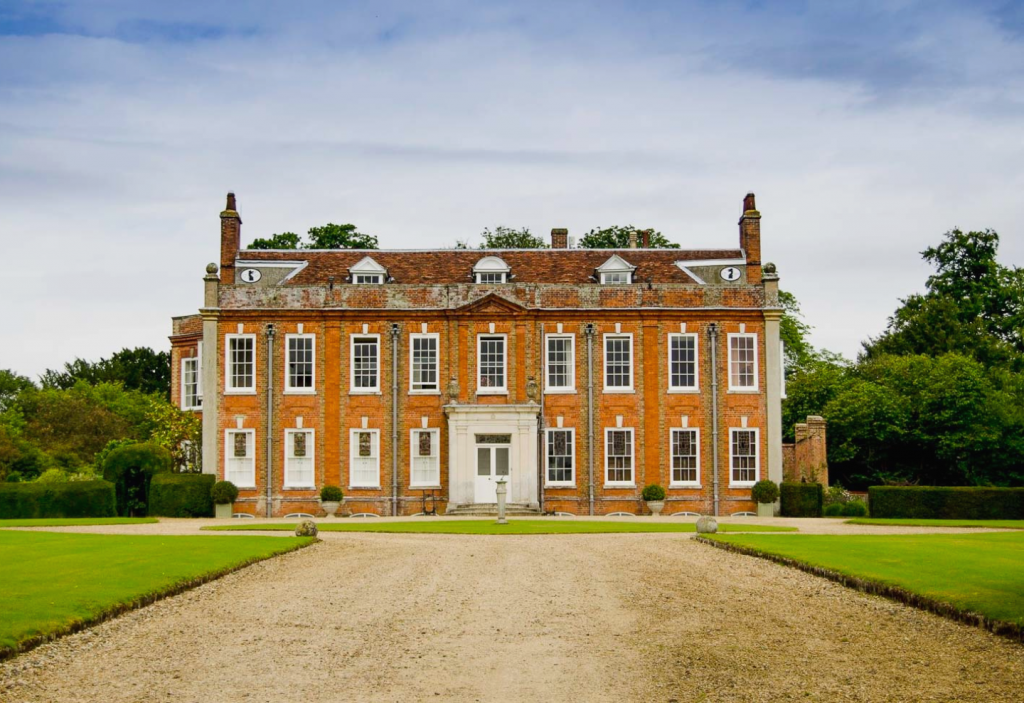
Belchamp Hall (Suffolk) — Used as the fictional “Felsham Hall” and for Lovejoy’s workshop in later seasons.
Lavenham (Suffolk) — Scenes filmed here include exterior village/heritage-type shots, including the final episode “Last Tango in Lavenham.”
Finchingfield (Essex) — Used for several episodes, including a Christmas special; village green, historic buildings.
Coggeshall (Essex) — Appears in Series 4 and is noted for its clock-tower used in the show.
Kersey (Suffolk) — The village where a ford-crossing scene was filmed (episode “The Firefly Cage”).
Shingle Street & Walberswick (Suffolk) — Coastal/harbour locations used in early episodes such as “The Firefly Cage”.
Burgh Island (Devon) — Single-episode location; a tidal island setting used for dramatic effect.
 The Lovejoy Lounge